9 Best Support Automation Tools for SaaS Companies in 2026
Discover the best support automation for SaaS companies with this breakdown of 9 platforms built to handle technical users, rapid product updates, and complex multi-issue tickets. From AI-powered deflection to deep CRM and engineering integrations, these tools help SaaS teams reduce ticket volume and maintain support quality without scaling headcount.
 Matt PattoliFounder13 min read
Support teams at SaaS companies face a challenge that most helpdesk tools weren't designed for. Your users are technical, your product ships updates constantly, and a ticket can shift from a "how do I" question to a bug report to a billing issue within the same conversation. Generic automation built for retail or e-commerce simply doesn't hold up under that pressure.
The best support automation tools for SaaS go deeper than canned responses and FAQ deflection. They understand product context, connect to your engineering and CRM stack, learn from every interaction, and know when to escalate gracefully. Whether you're a startup drowning in repetitive tickets or a scaling company trying to maintain quality without ballooning headcount, the right tool changes everything.
Here are the top support automation platforms built or well-suited for SaaS teams, evaluated on AI quality, SaaS-specific integrations, deployment ease, and how well they handle the full ticket lifecycle.
1. Halo AI
Best for: SaaS teams that need AI-native support with deep product context and engineering integrations
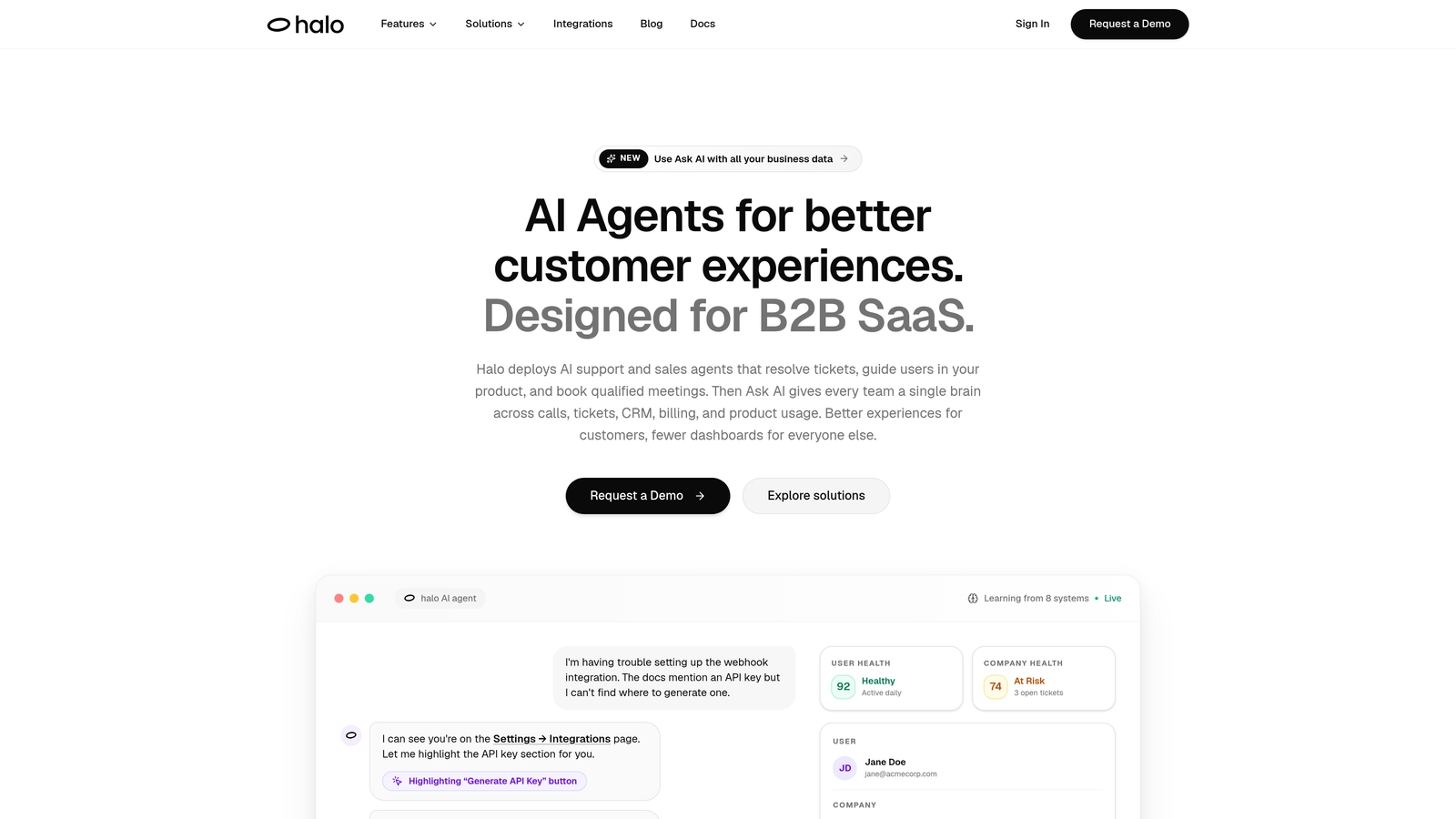
Halo AI is an AI-first customer support platform built specifically for SaaS — deploying intelligent agents that resolve tickets, guide users through your product, and surface business intelligence from every support interaction.
Where This Tool Shines
What sets Halo apart is page-aware context. The AI agent actually sees what the user is currently viewing inside your product, which means guidance is precise and situational rather than generic. Instead of pointing someone to a help article, the agent can walk them through exactly what's on their screen right now.
Halo also goes beyond resolving tickets. The smart inbox surfaces customer health signals, anomaly detection, and revenue intelligence, turning your support queue into a source of product and business insight. Auto bug ticket creation routed directly to Linear means engineering gets clean, actionable reports without manual triage from your support team.
Key Features
Page-Aware AI Agents: The agent sees what the user is currently viewing in your product, enabling contextual guidance that's specific to their exact situation.
Continuous Learning: The AI improves from every interaction, getting smarter about your product, your users, and common resolution patterns over time.
Auto Bug Ticket Creation: Automatically generates and routes bug reports to Linear or your engineering system when support interactions reveal product issues.
Smart Inbox with Business Intelligence: Surfaces customer health signals, anomaly detection, and revenue intelligence beyond standard support metrics.
Live Agent Handoff: Escalates to human agents with full conversation context preserved, so nothing gets lost in the transition.
Deep Integrations: Connects to Linear, Slack, HubSpot, Intercom, Stripe, Zoom, PandaDoc, and Fathom — covering your entire SaaS stack.
Best For
SaaS companies of any size that want AI-native support rather than AI bolted onto an existing helpdesk. Particularly strong for product-led teams where support, product feedback, and engineering workflows need to stay tightly connected.
Pricing
Contact for pricing. A free trial and demo are available at haloagents.ai.
2. Intercom
Best for: SaaS teams that already use Intercom as their primary customer communication layer
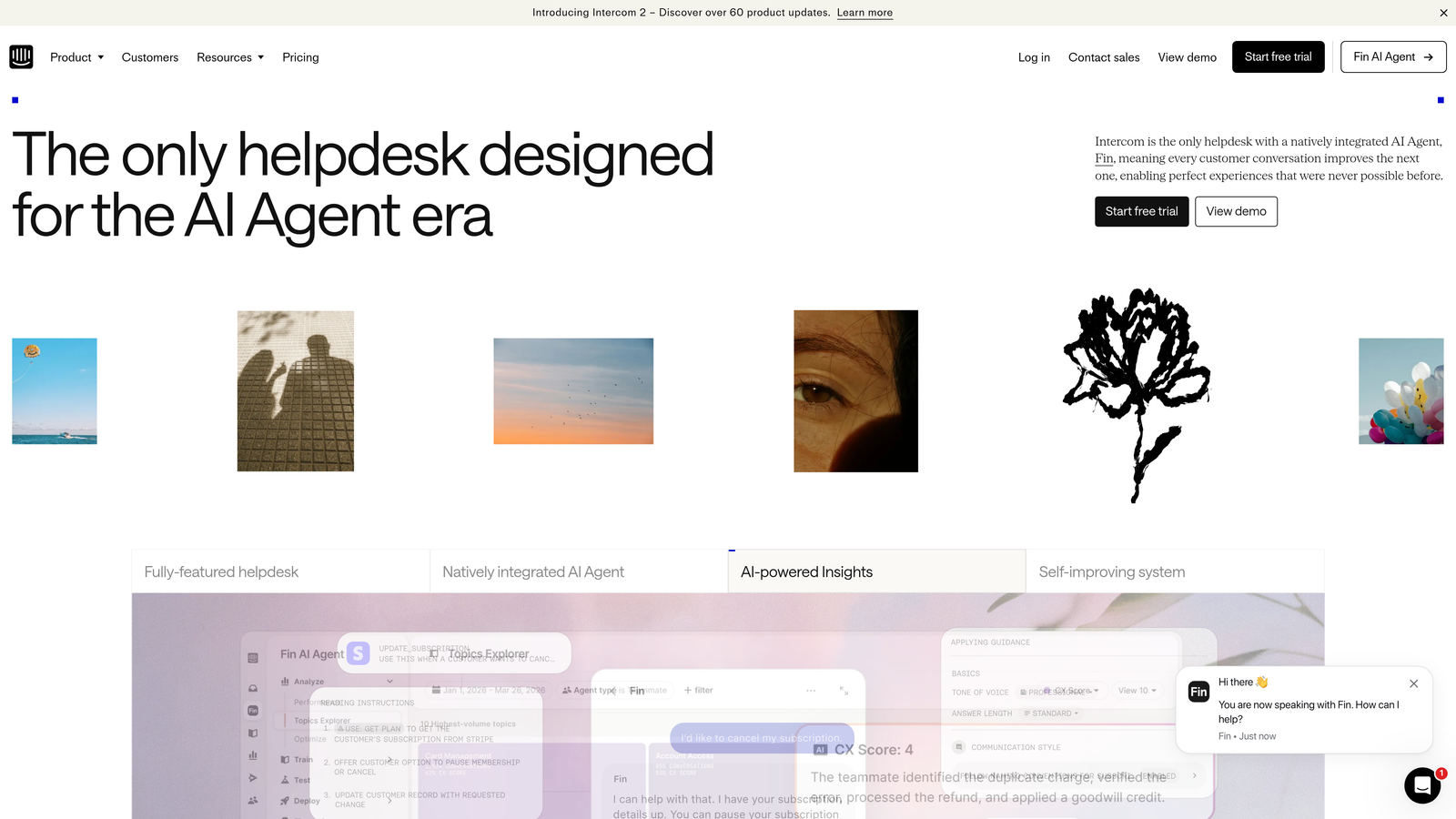
Intercom is a widely adopted SaaS communication platform with Fin, an AI agent built on large language models that resolves support queries using your help center content.
Where This Tool Shines
Intercom's strength is its position as the central communication layer for many SaaS products. If you're already using it for in-app messaging, email, and onboarding, adding Fin AI for support automation is a natural extension rather than a separate tool to integrate.
Fin has matured considerably as an AI agent, capable of handling multi-turn conversations and resolving queries without human intervention. The unified messenger experience across in-app, email, and web keeps the customer experience consistent across channels.
Key Features
Fin AI Agent: Resolves support queries autonomously using your help center content, with natural language understanding built on large language models.
Unified Messenger: Consistent customer experience across in-app chat, email, and web without managing separate channel tools.
Workflow Automation: Handles ticket routing, escalation logic, and follow-up sequences without manual configuration for each scenario.
Conversation Analytics: Tracks resolution rates, CSAT, and conversation trends to inform support strategy.
App Marketplace: Extensive integrations with SaaS tools across CRM, billing, and engineering categories.
Best For
SaaS teams already invested in the Intercom ecosystem who want to layer AI automation onto an existing communication setup. Less ideal if you're starting fresh and want AI-native architecture from the ground up.
Pricing
Starts at $39/seat/month. Fin AI is an add-on priced per resolution, so costs scale with usage volume.
3. Zendesk
Best for: Enterprise SaaS organizations with dedicated support operations teams
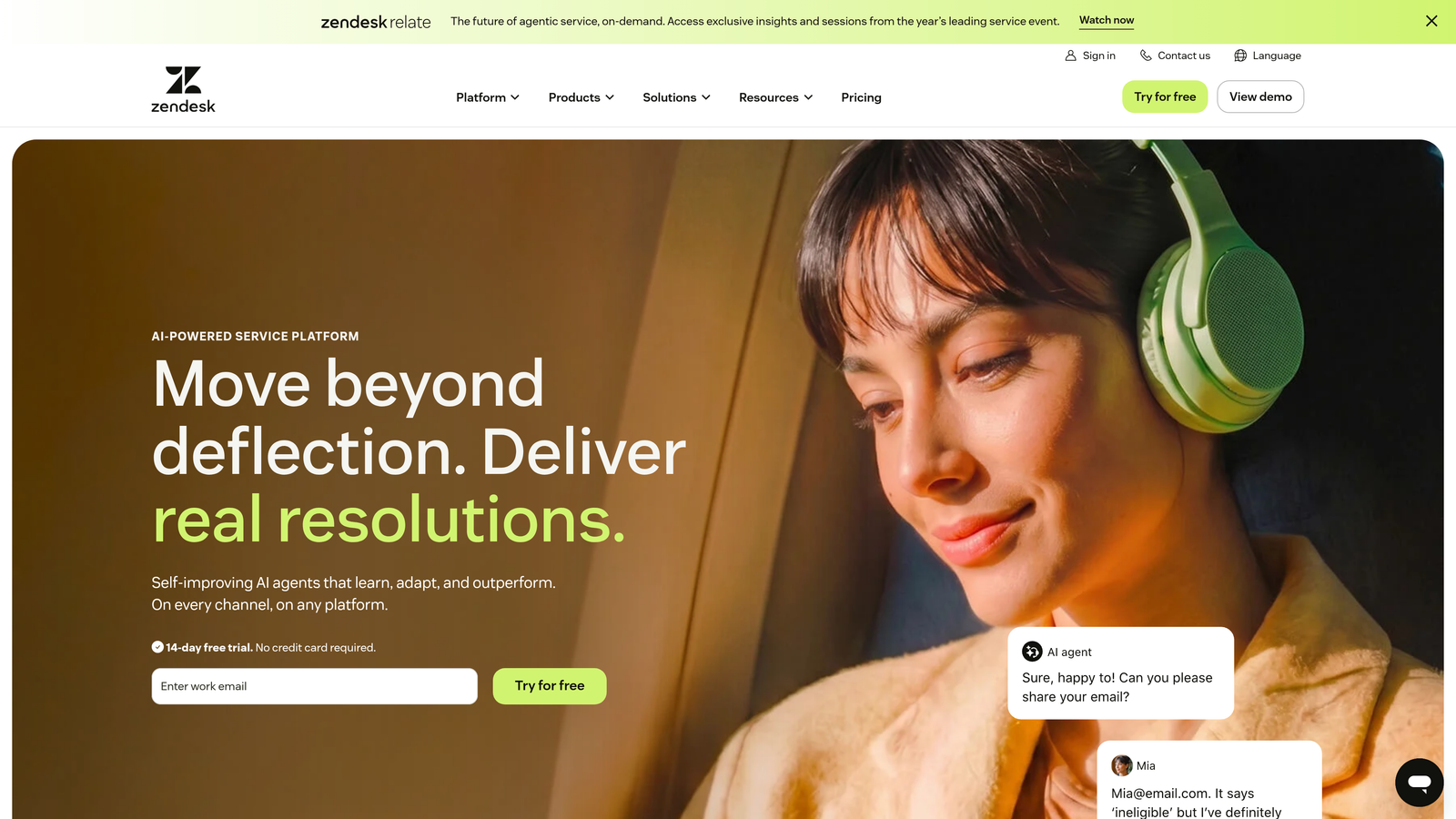
Zendesk is the enterprise-grade helpdesk platform with an expanding AI suite covering intelligent triage, agent assistance, and self-service automation at scale.
Where This Tool Shines
Zendesk's core strength is operational depth. For large SaaS organizations with complex SLA requirements, multi-tier support structures, and extensive reporting needs, it remains the most mature platform in the market. The integration ecosystem of over 1,000 apps means you can connect virtually any tool in your stack.
The AI suite has expanded significantly, adding intelligent triage, agent copilot features, and suggested replies. That said, Zendesk's AI is generally described as layered onto an existing helpdesk architecture rather than built AI-first, which matters if autonomous resolution is your primary goal.
Key Features
Intelligent Triage: AI-powered routing and categorization that directs tickets to the right team or queue automatically.
Agent Copilot: Suggested replies and next-best-action recommendations that help agents respond faster and more consistently.
SLA Management: Robust tools for tracking and enforcing service level agreements across support tiers.
Advanced Reporting: Detailed analytics across ticket volume, resolution time, agent performance, and customer satisfaction.
Workflow Automation: Triggers, macros, and automation rules that handle repetitive routing and status updates.
Best For
Larger SaaS companies with dedicated support ops teams who need enterprise-grade reliability, reporting, and compliance. Smaller teams may find the setup complexity and cost difficult to justify.
Pricing
Suite plans start at $55/agent/month. AI add-ons are available at higher tiers, which can push total cost considerably higher for teams that want full automation capabilities.
4. Freshdesk
Best for: Growing SaaS teams that need solid AI automation at a more accessible price point
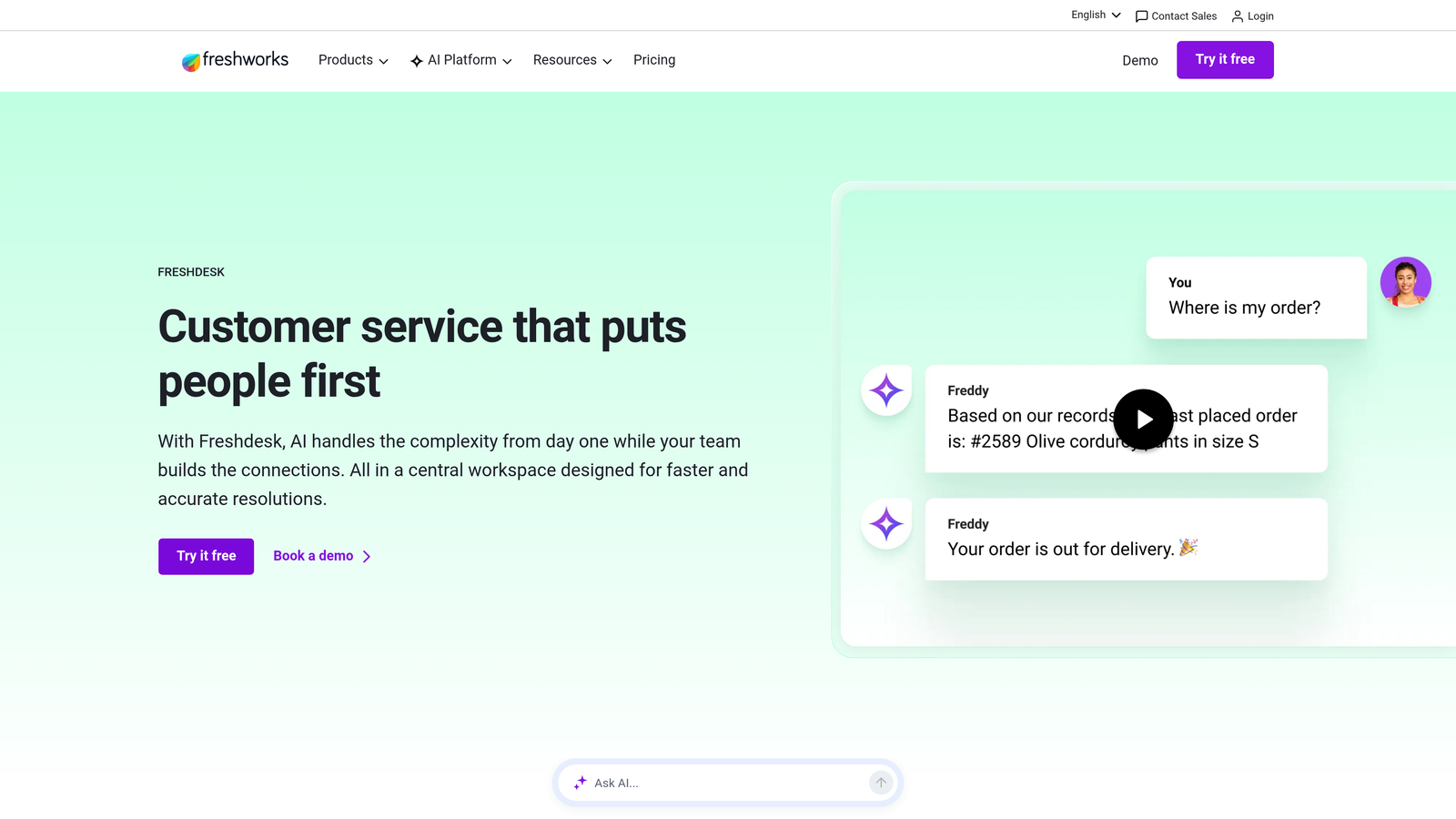
Freshdesk is a cost-effective helpdesk with Freddy AI built in, covering ticket automation, self-service bots, and agent-assist features across the full support workflow.
Where This Tool Shines
Freshdesk positions itself as the more affordable alternative to Zendesk without sacrificing core helpdesk functionality. Freddy AI handles ticket categorization, routing, and suggested responses, and the Freddy Self Service bot can deflect a meaningful portion of common queries before they reach an agent.
The omnichannel inbox covering email, chat, phone, and social in one place is genuinely useful for SaaS teams supporting users across multiple contact points. The free plan also makes it accessible for very early-stage teams that need basic structure before they're ready to invest in a full AI platform.
Key Features
Freddy AI: Handles ticket categorization, intelligent routing, and suggested responses to speed up agent workflows.
Freddy Self Service Bot: Automated query resolution for common questions before they reach the agent queue.
Omnichannel Inbox: Unified view of email, chat, phone, and social support in one interface.
AI-Assisted Knowledge Base: Suggests relevant articles to agents and customers based on query context.
Collision Detection: Prevents two agents from working on the same ticket simultaneously.
Best For
SaaS teams in the growth stage that need reliable helpdesk automation without enterprise pricing. Also a good starting point for early-stage companies that will migrate to a more specialized platform as they scale.
Pricing
Free plan available. Paid plans start at $15/agent/month. AI features are available on higher tiers.
5. Tidio
Best for: Startups and small SaaS teams that need fast deployment without engineering resources
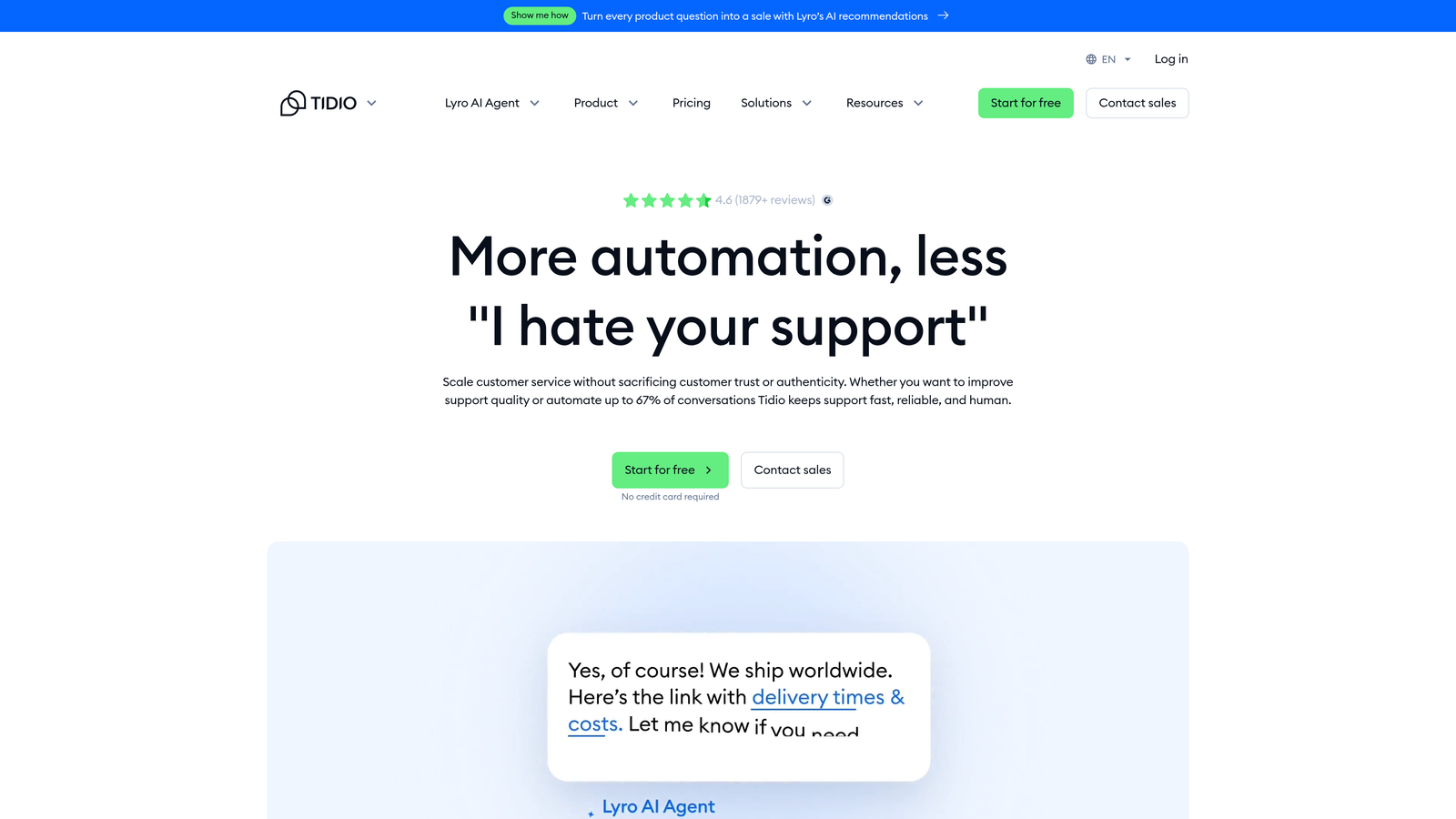
Tidio is a lightweight live chat and AI chatbot platform popular with startups and small SaaS teams who need quick deployment without deep technical setup.
Where This Tool Shines
Speed of deployment is Tidio's genuine differentiator. The visual drag-and-drop chatbot builder requires no coding, meaning a support manager can build and launch automated flows in hours rather than weeks. For teams without dedicated engineering support, that matters a lot.
Lyro, Tidio's AI chatbot, handles common customer queries with conversational responses. It's not the deepest AI in this list, but for repetitive, predictable support volume, it handles the job well. The mobile app for live chat also makes it practical for small teams where support is handled by generalists.
Key Features
Lyro AI Chatbot: Handles automated customer query resolution for common questions without requiring manual flow configuration for every scenario.
Visual Flow Builder: Drag-and-drop chatbot builder that requires no coding knowledge to create and deploy automation.
Live Chat with Mobile App: Agents can respond from mobile, making it practical for small teams without dedicated support coverage.
Proactive Messaging Triggers: Visitor behavior tracking that initiates conversations based on user actions or page visits.
Platform Integrations: Connects to Shopify, WordPress, and common SaaS platforms for basic workflow integration.
Best For
Early-stage SaaS companies and startups that need immediate automation without engineering involvement. Less suited for complex, multi-system SaaS environments where deep integrations and advanced AI are required.
Pricing
Free plan available. Lyro AI plans start at $29/month, making it one of the most accessible options on this list.
6. Drift
Best for: SaaS teams where support, sales, and product-led growth motions overlap
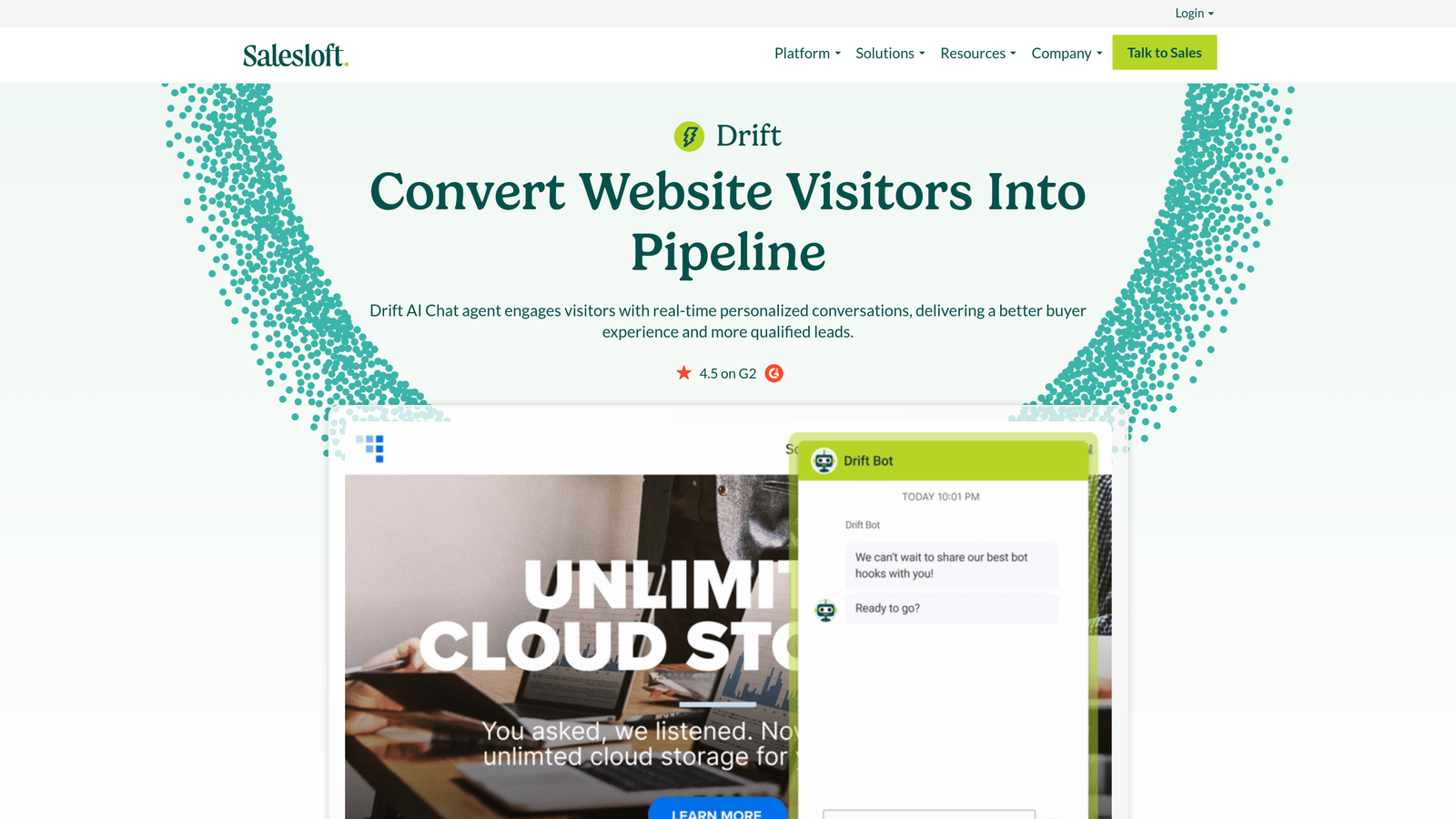
Drift is a conversational AI platform that bridges support and revenue workflows, particularly useful for SaaS teams where customer conversations span support, sales, and trial-to-paid conversion.
Where This Tool Shines
Drift's original strength was conversational marketing, and that DNA shows in how it handles the intersection of support and revenue. For product-led growth companies where a support conversation might naturally transition into a sales opportunity or a renewal discussion, Drift's intelligent routing between support agents and sales reps is a genuine advantage.
Account-based targeting lets you treat enterprise prospects differently from self-serve users in the same chat interface, which is valuable for SaaS companies with mixed customer segments. If you're running a PLG motion, Drift's ability to route conversations contextually across teams is hard to replicate with pure support tools.
Key Features
AI-Powered Chatbots: Handles support deflection and lead qualification simultaneously within the same conversation interface.
Intelligent Routing: Routes conversations between support agents and sales reps based on context, intent, and account data.
Meeting Scheduling: Embeds calendar booking directly in chat, removing friction from sales handoffs during support conversations.
Account-Based Targeting: Delivers different experiences to different visitor segments based on company data and account signals.
CRM Integrations: Deep connections with Salesforce, HubSpot, and Marketo for revenue workflow alignment.
Best For
SaaS companies running PLG or enterprise sales motions where support and revenue conversations are closely linked. Less focused on pure support automation depth compared to dedicated helpdesk platforms.
Pricing
Premium plan starts at $2,500/month. Enterprise pricing available on request, positioning this firmly as a mid-market and above tool.
7. Help Scout
Best for: SaaS teams that prioritize relationship quality and human-feeling support over full automation
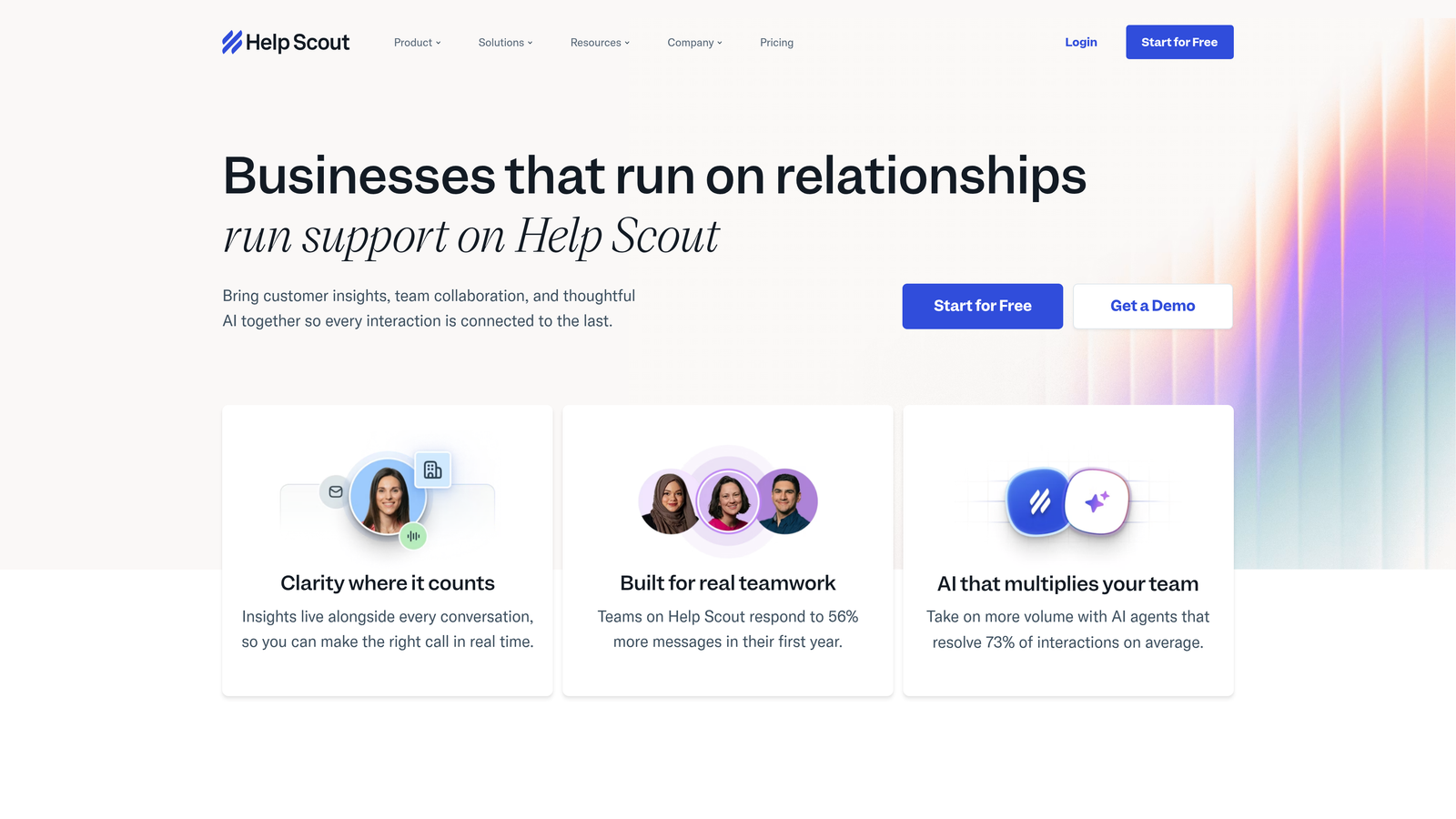
Help Scout is a human-first support platform with AI features designed to make agents faster and more consistent, rather than replacing them entirely.
Where This Tool Shines
Help Scout's philosophy is that great support feels personal, and its AI features are built to reinforce that rather than undermine it. AI Assist helps agents draft replies and adjust tone. AI Summarize gives instant conversation context so agents can pick up mid-thread without reading the entire history. These are tools that make humans better, not tools that replace them.
The shared inbox experience is genuinely well-designed, with collision detection, private notes, and a customer data sidebar that shows full interaction history in context. For SaaS companies where a human touch is a deliberate part of the brand, Help Scout hits a different note than the more automation-heavy platforms.
Key Features
AI Assist: Drafts replies and adjusts tone based on agent input, speeding up response time without removing the human voice.
AI Summarize: Instantly surfaces conversation context so agents can jump into any thread with full situational awareness.
Shared Inbox: Collaborative inbox with collision detection, private notes, and assignment workflows for team coordination.
Docs Knowledge Base: Built-in knowledge base with AI-powered search that surfaces relevant articles for agents and customers.
Customer Data Sidebar: Full interaction history and customer data visible alongside every conversation.
Best For
SaaS companies where high-touch support is a competitive differentiator and relationship quality matters more than maximizing deflection rates. Strong fit for B2B SaaS with complex enterprise customers.
Pricing
Starts at $22/user/month. Higher tiers are required to unlock the full AI feature set.
8. Kustomer
Best for: SaaS companies with complex customer data and omnichannel support needs
Kustomer is a CRM-native support platform that unifies customer data across all touchpoints, with AI automation across channels suited to SaaS teams managing high customer data complexity.
Where This Tool Shines
Kustomer's defining feature is the full customer timeline: every interaction, channel, and data point consolidated into a single view for each customer. For SaaS companies where a customer might contact you via email, chat, and phone across multiple product issues over months, that unified context changes how support can operate.
The CRM-native architecture means automation can be personalized based on deep customer data rather than just the current conversation. Routing, categorization, and auto-responses can all be informed by account health, subscription tier, or historical behavior, which is a level of personalization most helpdesks don't offer natively.
Key Features
Full Customer Timeline: Every interaction across every channel consolidated into a single chronological view per customer.
AI-Powered Automation: Routing, categorization, and response automation informed by full CRM data, not just current conversation context.
Omnichannel Support: Email, chat, voice, SMS, and social all managed from a unified interface.
Deep CRM Integration: Customer data drives personalized automation logic across the entire support workflow.
Proactive Outreach: Triggers outbound support actions based on customer behavior signals before issues escalate.
Best For
Mid-market and enterprise SaaS companies with high customer data complexity, multiple support channels, and a need for personalization at scale. Pricing positions it above the reach of most early-stage teams.
Pricing
Starts at $89/user/month. Enterprise pricing available on request.
9. Gorgias
Best for: SaaS companies with a subscription commerce component and high billing-related support volume
Gorgias is a support automation platform with particularly strong billing and transactional integrations, making it a practical fit for SaaS companies where subscription management drives a significant share of support tickets.
Where This Tool Shines
Gorgias is best known in e-commerce, but its deep Stripe integration makes it genuinely useful for subscription SaaS. Auto-responses for billing queries, charge lookups, and subscription status questions can be handled without any agent involvement, which is valuable when billing issues represent a disproportionate share of your ticket volume.
The rules engine and macros are flexible enough to handle a wide range of repetitive ticket types, and the revenue statistics tied to support interactions give teams a clearer picture of how support activity connects to customer retention and expansion.
Key Features
Stripe and Shopify Integrations: Deep billing and transactional integrations that power auto-responses for subscription and payment queries.
AI Auto-Responses: Handles high-volume transactional queries automatically without agent involvement.
Rules Engine and Macros: Flexible automation for repetitive ticket types with customizable routing and response logic.
Revenue Statistics: Ties support interaction data to revenue metrics for clearer visibility into support's business impact.
Omnichannel Inbox: Unified inbox covering social media, SMS, and email alongside standard support channels.
Best For
SaaS companies that have a commerce or subscription billing component to their support volume. Less relevant for pure software SaaS where billing queries are a small fraction of overall ticket load.
Pricing
Starts at $10/month for 50 tickets, scaling by ticket volume rather than per-seat, which works well for teams with variable support load.
Choosing the Right Tool for Your SaaS Stage
The best support automation tool depends less on feature lists and more on where you are as a company and what kind of support experience you're trying to deliver.
Early-stage startups that need fast deployment without engineering resources should look at Tidio or Freshdesk. Both offer accessible entry points, quick setup, and enough automation to handle early ticket volume without a dedicated support ops function.
Growth-stage SaaS teams scaling support without scaling headcount will find the most leverage in Halo AI or Intercom. Halo's AI-native architecture, page-aware context, and engineering integrations make it particularly strong for product-led teams. Intercom is the natural choice if you're already using it as your primary customer communication layer.
Teams where support and sales overlap should evaluate Drift seriously. If your support conversations regularly transition into expansion or conversion opportunities, Drift's routing intelligence across support and revenue teams is difficult to replicate elsewhere.
High-touch B2B SaaS where relationship quality is a competitive differentiator will find Help Scout's human-first approach more aligned with their goals than a high-deflection automation platform.
Enterprise SaaS with complex operations, strict SLA requirements, and dedicated support teams will get the most from Zendesk or Kustomer, depending on whether operational depth or CRM-native personalization is the priority.
Your support team shouldn't scale linearly with your customer base. AI agents can handle routine tickets, guide users through your product in real time, and surface business intelligence while your team focuses on the complex issues that genuinely need a human touch. See Halo in action and discover how continuous learning transforms every support interaction into smarter, faster, more informed support at scale.